
State of Maintenance 2026: The $1.4 Trillion Problem Every Facility Team Must Solve
New research reveals Fortune 500 companies lose $1.4T annually to unplanned downtime. Get the data, benchmarks, and trends shaping maintenance management in 2026.

Key Takeaways
- Fortune 500 companies lose $1.4 trillion annually to unplanned downtime—up from $864B in 2019
- Downtime costs have quadrupled in heavy industry over the past 5 years
- 69% of maintenance professionals are 50+ years old, creating an urgent skills gap
- AI-powered maintenance reduces unplanned downtime by up to 75%
- Asia-Pacific is the fastest-growing CMMS market at 12-14% CAGR
The numbers are in, and they’re sobering.
According to Siemens’ True Cost of Downtime 2024 report, the world’s 500 biggest companies now lose $1.4 trillion annually to unplanned downtime. That’s 11% of their revenue—up from $864 billion (8%) just five years ago.
Downtime costs aren’t just rising. They’re accelerating.
We analyzed the latest industry research, benchmark data, and technology trends to understand what’s driving this crisis—and what the highest-performing maintenance teams are doing differently.
Here are the key findings from our State of Maintenance 2026 research.
The Downtime Crisis: Costs Have Quadrupled
The headline number is staggering, but the industry breakdown tells the real story.
Downtime Cost by Industry (2025-2026)
| Industry | Hourly Downtime Cost | Change Since 2019 |
|---|---|---|
| Automotive manufacturing | $2.3 million | 2x increase |
| Heavy industry | Variable | 4x increase |
| General manufacturing | $260,000 | Significant rise |
| Healthcare/Finance | Up to $5 million | Regulatory penalties included |
| SMBs | $427/minute | Proportionally higher impact |
Source: Siemens True Cost of Downtime 2024
The average company experiences 800 hours of downtime per year—more than two hours per day of lost production.
Emergency repairs carry 150-200% cost premiums compared to planned maintenance. A single prevented major failure often pays for an entire year of maintenance software and preventive programs.
The Workforce Cliff: 69% Are 50+ Years Old
Behind the downtime numbers is an even more concerning trend: the people who know how to fix things are retiring.
The Skilled Trades Gap
| Metric | Data Point |
|---|---|
| Annual skilled trades job openings (US) | 2.9 million |
| Qualified graduates produced annually | 1.25 million |
| Annual shortfall | 1.7 million workers |
| Maintenance professionals 50+ years old | 69% |
| Manufacturing workforce retiring by 2030 | 40% |
Source: Lightcast, Maintenance World
This isn’t a temporary labor shortage. It’s a structural shift that’s been building for decades.
“What we’re seeing is a structural imbalance in the labor market. The US is getting older. Birth rates are declining. And fewer young people want to or are encouraged to work in the trades.” — Josh Wright, Executive VP, Lightcast
For every machinist who retires, there are 2.4 job openings and only one graduate to fill them. For maintenance and repair workers, that ratio is 4-to-1.
The facilities teams that will thrive aren’t just hiring—they’re using technology to multiply the productivity of every technician they have. Mobile CMMS apps put work orders, asset history, and troubleshooting guides in technicians’ hands, reducing time spent walking back to offices or searching for information.
Technology Adoption: AI Is Accelerating Fast
The technology landscape is shifting rapidly. Here’s where adoption stands:
Maintenance Technology Adoption (2025-2026)
| Technology | Adoption Rate | Trend |
|---|---|---|
| Cloud-based CMMS | 63%+ | Growing rapidly |
| Digital maintenance tools | 62% | Standard practice |
| AI (fully/partially implemented) | 32% | 65% planning to adopt |
| Predictive monitoring priority | 52% | Rising |
| Subscription CMMS model | 65% of new deployments | Dominant |
Source: Coherent Market Insights, Future Market Insights
The shift to cloud is nearly complete. For most organizations, on-premise CMMS is now a niche choice reserved for specific compliance requirements.
But the bigger story is AI adoption. Only 32% of teams have implemented AI today, but 65% plan to adopt it by end of 2026. That’s a massive wave of change coming.
What AI-Powered Maintenance Delivers
The results from early adopters are compelling:
- 75% reduction in unplanned downtime (with AI + automated work orders)
- 18-25% decrease in overall maintenance costs
- 10-20% improvement in equipment uptime
- 45% reduction in equipment failure rates (IoT sensors)
Plants combining predictive analytics with automated work order generation are seeing the biggest gains. When sensors detect anomalies, the system creates work orders automatically—before equipment fails.
The CMMS Market: Asia-Pacific Leads Growth
The global CMMS market continues strong growth, but regional dynamics vary significantly.
CMMS Market Size & Growth
| Region | 2024 Size | 2030 Projection | CAGR |
|---|---|---|---|
| Global | $1.27-1.29B | $2.15-2.41B | 9-11% |
| Asia-Pacific | — | — | 12-14% |
| South Asia & Pacific | — | — | 13.9% |
Source: Grand View Research, Mordor Intelligence
Asia-Pacific is the fastest-growing region, driven by:
- Rapid industrialization in Southeast Asia
- Government initiatives like Thailand 4.0
- Growing emphasis on sustainability and green buildings
- Increasing adoption of IoT in manufacturing
The Southeast Asia facilities management market alone is projected to grow from $85B in 2024 to $119B by 2030.
For facilities teams operating across multiple countries, this growth brings unique challenges: multilingual workforces, varying compliance requirements, and the need for localized support.
Download the Full Report
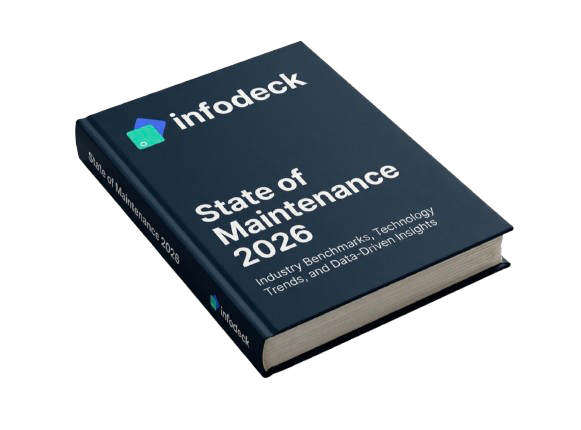
Get the complete State of Maintenance 2026 report with all benchmark data and implementation frameworks.
Download Free ReportSee It In Action
Ready to join the facilities teams achieving 75% less unplanned downtime? Start your free 30-day trial.
Start Free TrialPreventive vs. Reactive: The Gap Persists
Despite years of industry education, the reactive maintenance trap remains widespread.
Maintenance Strategy Adoption
| Strategy | Companies Using | Actual Activity % |
|---|---|---|
| Preventive maintenance | 88% | 51% |
| Predictive maintenance | 40% | 27% |
| Reactive/Run-to-failure | 52% | ~49% |
Source: Verdantis, McKinsey
Here’s the disconnect: 88% of companies say they use preventive maintenance, but only 51% of actual maintenance activities are preventive. Nearly half of all work is still reactive—fixing problems after they occur.
The gap between intention and execution is where CMMS software makes the difference. Without automated preventive maintenance scheduling, PM tasks slip. Technicians get pulled into emergencies. The cycle continues.
The Cost Difference
The economics are clear:
| Maintenance Type | Relative Cost |
|---|---|
| Predictive maintenance | Baseline |
| Preventive maintenance | 8-12% higher |
| Reactive maintenance | 150-200% higher |
Emergency repairs don’t just cost more in labor and parts. They cascade into production losses, secondary equipment damage, and customer impact.
Sustainability: Green Buildings Demand Better Maintenance
Sustainability requirements are reshaping facilities management—and maintenance is at the center.
Key Sustainability Drivers
- Buildings account for 40% of global emissions
- IoT-integrated CMMS reduces energy consumption by up to 30%
- Singapore: 95% of Grade A office buildings are Green Mark certified
- EU: Building Automation Control Systems (BACS) mandated for large buildings by January 2025
Green building certifications like LEED, BREEAM, and Singapore’s Green Mark aren’t just about initial construction. They require ongoing maintenance documentation, energy monitoring, and compliance tracking.
Facilities teams using IoT-integrated maintenance platforms can demonstrate environmental compliance while reducing energy costs—a win for both sustainability goals and operating budgets.
Industry-Specific Insights
Different industries face different maintenance challenges. Here’s what the data shows:
Education Facilities
- 54% of US public school districts need to update/replace building systems
- Average school building age: 49 years
- CMMS adoption delivers 28% improvement in maintenance efficiency
Education facilities face aging infrastructure with limited budgets. The schools achieving better outcomes are using technology to extend equipment life and prioritize the most critical repairs.
Healthcare Facilities
- Average hospital manages 35,000+ medical devices across 500+ categories
- Joint Commission accredits 4,000+ hospitals with strict maintenance requirements
- Compliance violations can cost $2-5M annually
For healthcare facilities, maintenance isn’t optional—it’s regulated. CMMS platforms that track Joint Commission, NFPA, and CMS compliance requirements help teams stay audit-ready while focusing on patient care.
Hospitality
- Average property: 15-25 maintenance-related complaints weekly
- Each negative review costs $1,200-2,000 in lost future bookings
- CMMS adoption delivers 200-400% ROI within 18-24 months
In hospitality, maintenance directly impacts guest experience and reviews. The properties with highest satisfaction scores use proactive maintenance to prevent guest-facing issues before they occur.
What High-Performing Teams Do Differently
Across all the research, a clear pattern emerges. The facilities teams achieving the best results share common practices:
1. They Measure What Matters
High performers track MTBF (Mean Time Between Failures) and MTTR (Mean Time to Repair) religiously. They know which equipment fails most often and how quickly their team responds.
System Availability = MTBF / (MTBF + MTTR)
Without measurement, you can’t improve. Work order analytics make this data visible and actionable.
2. They Automate Scheduling
PM compliance drops when scheduling is manual. High performers use automated preventive maintenance scheduling that creates work orders based on time, usage, or condition—and tracks completion rates.
3. They Build Knowledge Systems
When a senior technician retires, their knowledge shouldn’t leave with them. High performers document repair procedures, parts information, and troubleshooting guides in their asset management system.
4. They Start Small with Predictive
Not every piece of equipment needs sensors. High performers identify their most critical, expensive-to-fail assets and start there. Once they validate the approach, they expand.
5. They Connect Systems
The best results come from integration. When BMS alerts trigger work orders automatically, when IoT sensors create tickets before failures occur, when inventory levels reorder parts before stockouts—that’s when maintenance transforms from reactive to proactive.
The Bottom Line
The data is clear:
- Downtime costs are accelerating faster than most organizations realize
- The workforce cliff is real and requires technology to bridge
- AI adoption is about to surge from 32% to 65%+ by end of 2026
- Asia-Pacific leads growth at 12-14% CAGR
- The gap between intention and execution remains the biggest opportunity
The facilities teams that thrive in 2026 won’t just have good intentions about preventive maintenance. They’ll have systems that make it happen automatically.
Get the Full Report
This article summarizes key findings from our comprehensive State of Maintenance 2026 research.
The full report includes:
- Complete benchmark data by industry and region
- Detailed technology adoption curves
- Regional deep-dives for Asia-Pacific markets
- Implementation frameworks and checklists
- 50+ data points with source citations
Download the Full Report
Get the complete State of Maintenance 2026 report with all benchmark data, regional insights, and implementation frameworks.
Download Free Report
See It In Action
Ready to join the facilities teams achieving 75% less unplanned downtime? Start your free 30-day trial.
Start Free Trial
Sources
This research synthesizes data from multiple industry sources:


