
University Facilities Management: CMMS Guide for Higher Education
Manage campus facilities with CMMS. Learn how universities tackle $112B in deferred maintenance, optimize multi-building operations, and improve student experience.

Key Takeaways
- U.S. higher education faces $112 billion in deferred maintenance—with costs rising from $100/sqft in 2020 to $140/sqft in 2024
- Square footage per maintenance worker has increased 25% since 2007, while building condition scores have declined 15-20%
- Universities manage 10+ distinct building types requiring specialized maintenance approaches
- CMMS implementation can reduce response times significantly and extend critical asset lifespans through preventive scheduling
U.S. higher education institutions face a deferred maintenance backlog exceeding $112 billion. Moody’s Ratings warns this growing backlog poses “significant credit risk” for the sector, estimating that $750 billion to $950 billion in spending would be needed over the next decade just to make meaningful progress.
Meanwhile, facilities teams are being asked to do more with less. Square footage maintained per worker has increased nearly 25% since 2007, while building condition scores have declined.
This is the reality facing university facilities managers. Here’s how CMMS helps address it.
The Scale of University Facilities Management
Campus Complexity
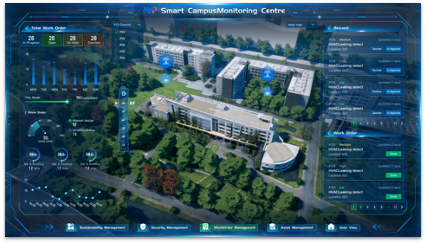
Universities aren’t just big buildings—they’re small cities. A typical mid-size campus might include:
| Building Type | Unique Maintenance Challenges |
|---|---|
| Academic buildings | Classroom scheduling coordination, AV equipment |
| Research laboratories | Specialized ventilation, hazardous materials, 24/7 climate control |
| Residence halls | 24/7 emergency response, high request volume, turnover prep |
| Athletic facilities | Specialized turf/court maintenance, large HVAC loads |
| Dining halls | Food safety compliance, commercial kitchen equipment |
| Libraries | Climate control for archives, extended hours |
| Student centers | High traffic wear, event setup/teardown |
| Performing arts | Specialized lighting/sound, stage equipment |
| Administrative | Standard office maintenance, security systems |
| Historic buildings | Heritage preservation requirements, non-standard systems |
According to GoAssetWorks’ analysis of university challenges, the population of many colleges and universities reaches “tens of thousands daily and occupies millions of square footage of area, eclipsing many of the world’s largest corporations.”
The Deferred Maintenance Crisis
The numbers tell a stark story. According to research from the MOST Policy Initiative:
| Metric | 2020 | 2024 | Change |
|---|---|---|---|
| National backlog per sqft | $100/gsf | $140/gsf | +40% |
| Buildings over 50 years old | ~33% | ~35% | Growing |
| Renewal funding shortfall | 30% | 30-40% | Persistent |
According to Inside Higher Ed’s analysis, a majority of colleges and universities funded less than a quarter of their deferred maintenance needs last fiscal year.
State system examples:
- California State University requested $1.3 billion for deferred maintenance—and received zero from the state budget. That request was just a fraction of their $5.8 billion backlog, which grows by $280 million annually.
- Oklahoma faces over $1.48 billion in deferred maintenance across its higher education system.
The Staffing Challenge
According to Gordian’s 2025 State of Facilities in Higher Education report:
- Square footage maintained per worker increased 25% since 2007
- Exterior condition scores declined 15%
- Mechanical system scores declined 20%
The APPA 2024 Thought Leaders Report notes that “three in ten of those working in higher education were 55 or older” in 2023—meaning a wave of retirements is imminent.
This isn’t sustainable without technology to multiply the effectiveness of remaining staff.
Why Universities Need CMMS
Challenge 1: Multi-Building Coordination
Universities manage portfolios that would challenge any property management firm—except the “tenants” (students, faculty, researchers) have far higher expectations for responsiveness.
CMMS addresses this by:
| Challenge | CMMS Solution |
|---|---|
| Work orders from 10+ building types | Centralized request portal with building/room routing |
| Different maintenance requirements per space | Asset-specific PM schedules and procedures |
| Resource allocation across campus | Technician workload balancing and geographic routing |
| Coordinating with academic schedules | Calendar integration, semester-based scheduling |
A work order management system designed for multi-site operations becomes essential when you’re managing millions of square feet across diverse building types.
Challenge 2: The Summer Crunch
Universities have a unique constraint: the academic calendar. Summer break provides an 8-12 week window when major maintenance can occur without disrupting classes—but this creates intense pressure to complete a year’s worth of deferred work in a few months.
CMMS planning for summer:
YEAR-ROUND WORKFLOW:

Academic Year (Sep-May):
├── Flag work orders as "defer to summer"
├── Track total project backlog
├── Estimate labor and material needs
└── Document urgency levels

Spring Planning (Mar-May):
├── Prioritize by safety impact and building use
├── Schedule contractors and internal teams
├── Order long-lead materials
└── Coordinate with Events for summer programs

Summer Execution (Jun-Aug):
├── Track project completion daily
├── Document before/after conditions
├── Manage contractor access
└── Report progress to administration

Back-to-School (Aug):
├── Verify all spaces ready for occupancy
├── Complete safety inspections
├── Document completed vs. deferred work
└── Update asset records
Without CMMS tracking this cycle, deferred items get lost, and the backlog grows.
Challenge 3: Diverse Stakeholder Expectations
Unlike commercial facilities, universities serve multiple distinct user groups:
| Stakeholder | Primary Concern | CMMS Feature Needed |
|---|---|---|
| Students | Quick response to dorm issues | Self-service request portal, status tracking |
| Faculty | Minimal classroom disruption | Scheduling coordination, advance notification |
| Researchers | Lab environment stability | IoT sensor monitoring, automated alerts |
| Athletics | Field/court readiness | Specialized asset tracking, event scheduling |
| Administration | Budget visibility, compliance | Reporting dashboards, cost tracking |
| Housing | Turnover efficiency | Inspection checklists, punch list management |
Challenge 4: Compliance Documentation
Universities face numerous compliance requirements:
Safety & Building Codes:
- Fire alarm testing (monthly/annual)
- Emergency lighting tests
- Elevator certifications
- Asbestos management
- ADA accessibility
Research Compliance:
- Laboratory ventilation verification
- Fume hood inspections
- Biosafety equipment certification
- Chemical storage inspections
Housing Regulations:
- Residential fire safety
- Health department inspections
- Life safety system documentation
Digital forms and inspection checklists create the audit trail that regulators require—and that protects the institution from liability.
CMMS Features for Higher Education
Essential Capabilities
| Feature | Why Universities Need It |
|---|---|
| Multi-site asset management | Track equipment across dozens of buildings |
| Work order routing | Auto-assign by building, trade, priority |
| Preventive maintenance scheduling | Combat deferred maintenance with proactive care |
| Mobile access | Technicians work across campus, not at desks |
| Self-service portal | Students/faculty submit requests 24/7 |
| Reporting & analytics | Budget justification, KPI tracking |
| Integration capabilities | Connect to BMS, student systems, ERP |
University-Specific Workflows
Residence Hall Turnover:
| Phase | CMMS Function |
|---|---|
| Move-out inspection | Checklist with photo documentation |
| Punch list generation | Auto-create work orders from inspection |
| Summer work scheduling | Prioritize by move-in date |
| Move-in readiness | Verification checklist, sign-off |
Research Lab Support:
| Requirement | CMMS Approach |
|---|---|
| Equipment certification tracking | Asset records with cert dates, auto-PM generation |
| Environmental monitoring | IoT integration with threshold alerts |
| Emergency response | Priority escalation for lab-critical issues |
| Compliance documentation | Inspection records with PI sign-off |
Event Support:
| Activity | CMMS Workflow |
|---|---|
| Setup requests | Work order type with event date/time |
| Equipment reservations | Asset scheduling |
| Post-event inspection | Follow-up work order generation |
| Charge-back tracking | Cost allocation by department |
Start Free Trial
Experience the full platform with 30-day free access. No credit card required.
Start Free TrialBook a Demo
Get a personalized walkthrough from our team. See how Infodeck fits your operation.
Schedule DemoImplementation Approach for Universities
Phase 1: Foundation (Weeks 1-6)
Week 1-2: Core Setup
- Configure campus building hierarchy
- Import critical asset inventory
- Set up user accounts for facilities team
- Configure work order categories
Week 3-4: Work Order Launch
- Create request submission portal
- Train facilities team on mobile app
- Begin capturing maintenance requests
- Establish triage and routing rules
Week 5-6: Initial Reporting
- Set up basic dashboards
- Document baseline metrics
- Train supervisors on reporting
- Gather initial feedback
Phase 2: Expansion (Weeks 7-16)
Week 7-10: Preventive Maintenance
- Enter manufacturer PM schedules
- Create compliance inspection checklists
- Set up automated PM generation
- Assign routes to technicians
Week 11-14: Stakeholder Rollout
- Train Housing on resident request process
- Enable faculty self-service requests
- Connect with student portal (if applicable)
- Communicate new process to campus
Week 15-16: Integration
- Connect to Building Management System (if available)
- Set up IoT sensor alerts (if applicable)
- Configure reporting for administration
- Document integration workflows
Phase 3: Optimization (Ongoing)
- Analyze first semester data
- Adjust PM frequencies based on failure patterns
- Refine work order categories
- Plan summer maintenance based on CMMS data
- Benchmark against APPA standards
Measuring Success
Key Performance Indicators
| KPI | Baseline | Target | Why It Matters |
|---|---|---|---|
| Work order response time | Often unknown | under 24 hours | Student/faculty satisfaction |
| PM completion rate | Often under 50% | >90% | Deferred maintenance prevention |
| Emergency work percentage | Often >40% | under 25% | Indicates reactive vs. proactive |
| Cost per gross sqft | Varies | Benchmark to APPA | Budget efficiency |
| Asset uptime | Varies | >95% critical | Research and teaching support |
Reporting for Administration
Universities face unique budget pressures. CMMS reporting should provide:
For Board/Trustees:
- Deferred maintenance backlog trend
- Capital renewal needs by building
- Compliance status summary
- Safety incident metrics
For Operations:
- Technician productivity
- Work order aging
- Preventive maintenance compliance
- Vendor performance
For Departments:
- Request status and history
- Response time metrics
- Cost allocation by unit
- Scheduled maintenance calendar
The Enrollment Cliff Factor
According to GoAssetWorks’ analysis, beginning as early as 2026, colleges and universities face a sharp decline in student populations.
This creates both challenges and opportunities for facilities:
Challenges:
- Reduced tuition revenue means tighter maintenance budgets
- Some buildings may need to be mothballed or repurposed
- Deferred maintenance backlog becomes harder to fund
Opportunities:
- Well-maintained facilities become a competitive advantage for enrollment
- Data-driven maintenance supports strategic space decisions
- CMMS helps identify underutilized buildings for consolidation
Facilities teams that can demonstrate ROI and support strategic planning will be essential as institutions navigate this transition.
Special Considerations
Historic and Heritage Buildings
Many campuses include buildings with historic designations requiring:
- Documentation of original materials and methods
- Specialized vendor management for restoration work
- Coordination with preservation authorities
- Balance between modern systems and historic character
CMMS asset records should capture these special requirements and flag compliance needs.
Research Facility Support
Research labs have the highest maintenance stakes—a failed freezer could destroy years of samples, or a ventilation failure could endanger researchers.
Critical CMMS features for research:
- IoT sensor integration for environmental monitoring
- Priority escalation for lab-critical equipment
- Certification tracking for regulated equipment
- PI notification and approval workflows
Sustainability and Energy Management
Universities increasingly have sustainability commitments. CMMS supports these goals through:
- Energy system maintenance optimization
- Equipment efficiency tracking
- Utility meter data integration
- Sustainability KPI reporting
According to ClickMaint’s research on university CMMS, CMMS helps universities “enhance sustainability through effective energy management, waste reduction, and resource optimization.”
Common Implementation Challenges
Challenge 1: Decentralized Operations
Many universities have facilities responsibilities split across central facilities, housing, athletics, and individual departments.
Solution: Start with central facilities, demonstrate value, then expand. Use CMMS reporting to show benefits to other units.
Challenge 2: Legacy Systems
Universities often have decades-old systems—paper-based in some areas, ancient software in others.
Solution: Don’t try to migrate everything. Start fresh with work orders, import only critical asset data, and build history forward.
Challenge 3: Academic Culture
Faculty may resist change or expect instant response to any request.
Solution: Create clear service levels, communicate transparently about priorities, and use data to demonstrate fairness in resource allocation.
Challenge 4: IT Integration Complexity
University IT environments are notoriously complex with security requirements that can slow integration.
Solution: Choose cloud-based CMMS requiring minimal IT infrastructure. Plan integration as Phase 2, not Phase 1.
The Path Forward
The deferred maintenance crisis in higher education isn’t going away. But CMMS provides the visibility, planning capability, and operational efficiency needed to make progress.
The key is starting—capturing data, building processes, and demonstrating value. Every university that has implemented CMMS reports the same thing: they wish they had done it sooner.
Managing a university campus? Explore how Infodeck helps higher education facilities manage multi-building operations with the flexibility that diverse campus environments require. Book a demo to discuss your campus’s specific needs.
Related reading:


